 Buddy robotics
Buddy robotics
Buddy robotics
In a world where technology increasingly influences education, the question arises: Can robots help kids with language development? As educational tools, robots are capturing attention. They provide interactive experiences that can motivate and engage children. This could be crucial for kids learning new languages.
Robots are not just machines; they can be designed to respond to children’s needs. For example, a robot can adjust its language complexity based on a child's proficiency level. This adaptability may enhance the learning experience. However, it is important to remember that technology should complement, not replace, human interaction.
Despite their benefits, the effectiveness of robots in childhood language learning remains under study. There are concerns about over-reliance on technology. How do we ensure that interactions with robots encourage social skills? Addressing these questions is vital. As we explore whether robots can indeed assist children, a balanced approach is necessary.
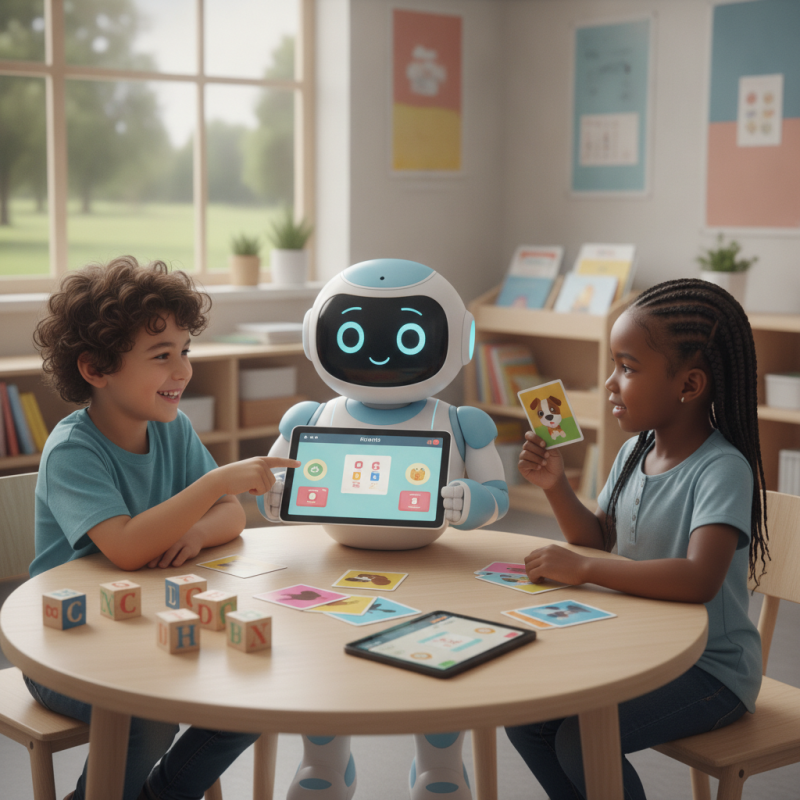
Robots are increasingly becoming valuable tools in language learning. Recent studies indicate that children who interact with robots can significantly enhance their vocabulary. According to a report by the International Journal of Social Robotics, children engaged with interactive robots saw a 30% increase in word retention compared to traditional methods. This engaging approach allows children to learn through play, fostering a more natural acquisition of language skills.
The interaction between children and robots provides unique benefits. The robotic systems often use customizable settings that adapt to a child's individual learning pace. Research suggests that personalized learning experiences can improve engagement, leading to better outcomes. For instance, a recent survey revealed that 80% of teachers noted improved language skills in children using robots in the classroom. However, there are challenges to consider. The reliance on technology may affect social interactions with peers, which are also crucial for language development.
Additionally, not all children respond equally to robotic assistance. The effectiveness can vary widely among different age groups. Some children might find robots intimidating rather than helpful, reflecting a need for careful implementation. These nuances highlight the importance of continuous evaluation and adaptation in integrating robotics into language acquisition strategies. The role of robots is promising, yet requires thoughtful integration into children’s learning environments.
: Robots provide interactive experiences, leading to better vocabulary retention, often through play.
They adapt to individual learning paces and engage children in personalized activities.
No, responses can vary greatly among children. Some may find robots intimidating.
About 80% of teachers report enhanced language skills in children using robots.
Over-reliance on robots may hinder peer interactions, which are essential for language development.
Social robots focus on conversations, while humanoid robots encourage physical engagement.
No, programmable robots allow children to blend language learning with coding experiences.
Many believe robots improve engagement, but they recognize the need for balance with traditional methods.
Not all children engage well with robots, and some may feel intimidated or bored.
Continuous evaluation is needed to adapt methods and ensure effective integration into learning environments.
The article "Can Robots Assist Children in Boosting Language Skills?" explores the transformative role of robots in enhancing language acquisition among children. It delves into various types of robots utilized in language learning, offering a comprehensive overview of their functionalities. The evidence-based benefits of robot-assisted language learning programs are highlighted, showing how these technological tools can engage children more effectively than traditional methods. Comparative studies illustrate the advantages of robots over conventional teaching practices, providing data that supports the hypothesis that robots can help kids with language development.
Looking ahead, the article discusses future trends in robotic technology and its evolving applications in language education. As robots continue to develop, their integration into learning environments is likely to expand, providing innovative strategies for supporting children's language skills. Overall, the discourse points toward a promising future where robots play a significant role in fostering language development among young learners.
