Buddy robotics Buddy robotics

How to Teach Robotics at Home for Beginners in 2026?

Time:2026-05-09 Author:Mason
0%

In today's tech-driven world, learning robotics has become essential for beginners. However, parents may wonder, "How to teach robotics at home for beginners?" This question holds great significance as robotics integrates creativity and critical thinking. It fosters problem-solving skills and encourages teamwork.

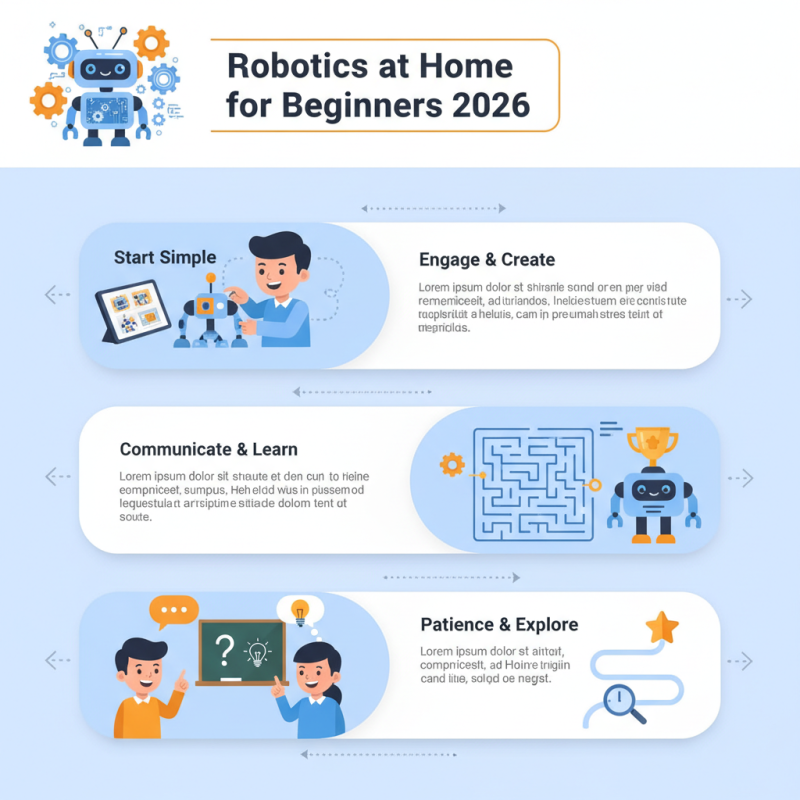
Teaching robotics at home should be an engaging process. Start with simple kits that offer hands-on learning. Kits from reputable brands ensure reliability. They also provide step-by-step tutorials that make the experience accessible. Design challenges can spark interest. For instance, creating a robot that navigates a maze promotes both fun and learning.

Communication is key in this journey. Encourage children to ask questions and share ideas. Mistakes are valuable lessons. Reflecting on setbacks can lead to innovative solutions. This approach instills resilience. Remember, patience is crucial in nurturing interest. Balancing structure with exploration can motivate beginners. Embrace the learning curve.
How to Teach Robotics at Home for Beginners in 2026?

How to Identify Age-Appropriate Robotics Kits for Beginners

Identifying age-appropriate robotics kits for beginners is essential for effective learning. Younger children, typically ages 4 to 7, benefit from simple kits with large pieces. These kits should focus on basic concepts, like building and simple programming. Look for options that encourage creativity and hands-on exploration. Interactive features, like sensors and lights, can engage young minds.

For older kids, ages 8 to 12, consider kits that introduce programming languages and more complex mechanics. These might include modular robotics, allowing for varied builds. Children at this age can handle detailed instructions. It's important to ensure they have the guidance to navigate challenges. Choose kits that provide support materials, including online tutorials.

Teenage learners may dive deeper, tackling more sophisticated technology. Kits for this age group can involve coding and robotics competitions. It's crucial to match the kit's complexity to their skills. Oversights in difficulty can lead to frustration. Not every kit will suit every child, so reflection is key. Parents should observe their child's engagement level to make informed choices.

Key Robotics Skills to Teach Children: An Overview of Essential Concepts

Teaching robotics at home can empower children with vital skills. Begin by introducing fundamental concepts like circuits, coding, and mechanics. Each concept forms the base for more complex ideas. Robotics combines art and science, making learning engaging and fun.

Hands-on activities are essential. Build simple circuits with batteries and LEDs. Show how components interact, making it easier for children to grasp concepts. Coding can start with visual programming tools. These tools allow kids to see the immediate impact of their code.

Tip: Be patient and encourage questions. Mistakes can lead to learning opportunities. Acknowledge that progress may be slow. Discussing challenges fosters critical thinking. Celebrate small victories to keep motivation high. Consider using everyday materials for projects to spark creativity. This approach also simplifies access to resources.

How to Teach Robotics at Home for Beginners in 2026? - Key Robotics Skills to Teach Children: An Overview of Essential Concepts

Skill Area Essential Concepts Recommended Age Resources
Programming Basics Introduction to coding languages such as Python or Scratch 8+ Online courses, coding kits
Mechanical Design Understanding gears, levers, and basic structures 7+ LEGO kits, design software
Electronics Basics of circuits, sensors, and motors 9+ Electronics starter kits, online tutorials
Robotics Control Understanding how to control robots through coding 10+ Robotics platforms, simulator software
Problem Solving Critical thinking and troubleshooting techniques 8+ Brain teasers, robotics challenges

Top Online Resources and Platforms for Learning Robotics at Home

Teaching robotics at home can feel overwhelming, especially for beginners. Fortunately, many online resources cater to various learning preferences. Platforms offering video tutorials and interactive lessons can make complex concepts more digestible. Consider using forums or community groups to connect with other learners. Interaction might enhance understanding and engagement.

Many websites provide comprehensive courses that cover fundamental principles, programming, and hardware assembly. Look for those featuring hands-on projects. Experimenting with small robotic kits can spark creativity. Online simulations are also beneficial for testing ideas without needing physical components. Remember, failures may occur during experiments, but this can enhance problem-solving skills.

Documentation and user feedback on various platforms offer insights into effective learning paths. Beginners should assess these resources critically. Not every method will suit every learner. Some may find certain explanations unclear. Adjusting the learning pace is crucial for success. All these considerations contribute to a holistic understanding of robotics at home.

Integrating Coding Fundamentals into Home Robotics Education

Teaching robotics at home for beginners requires a solid integration of coding fundamentals. Understanding coding is crucial. It forms the backbone of robotics. Start with simple programming languages. Python is often recommended for beginners. It offers clear syntax and is widely used. Scratch is another great entry point. This visual programming language enhances understanding without deep technical knowledge.

Creating projects can solidify these coding concepts. Build a basic robot with simple sensors and motors. Encourage learners to write code for their robot’s movements. This hands-on approach fosters engagement. Mistakes will happen, and that's okay. Learning to debug is part of the process. Encourage experimentation and problem-solving skills. Ask open-ended questions to inspire critical thinking.

Integrating coding in home robotics education fosters creativity. It can be challenging to balance coding complexity with accessible concepts. Not every student will grasp the material immediately. Be patient and flexible in your teaching. Consider different learning styles. Visual, auditory, or kinesthetic approaches can make a significant difference. Share resources and community learning platforms. Collaboration can enhance understanding and keep learners motivated.

Evaluating Progress: Setting Goals and Metrics for Robotics Learning

Setting effective goals is essential for teaching robotics at home. Define clear, achievable objectives tailored to your learner's experience. Consider starting with foundational skills, such as coding and basic electronics. For example, aim for your beginner to build a simple robot within a set timeframe. This approach fosters motivation and measurable progress.

Metrics are vital in tracking development. Use simple assessments like project completion, time taken, or the ability to troubleshoot problems. Encourage learners to maintain a journal that documents their experiences and lessons learned. This can reveal areas needing improvement. Reflect on these insights to adjust teaching methods and goals.

Regular feedback is crucial. Schedule check-ins to discuss challenges and celebrate successes. Creating a supportive learning environment encourages persistence. It's okay to encounter barriers; they offer valuable learning opportunities. Embracing imperfections fosters resilience, an essential trait in robotics.

FAQS

: What types of robotics kits are suitable for young children?

: Kits for ages 4 to 7 should have large pieces and focus on basic concepts. They should encourage creativity and hands-on exploration.

How can I ensure my older child benefits from robotics kits?

For ages 8 to 12, choose kits that introduce programming languages and complex mechanics. Support materials, like online tutorials, are essential.

What should teenagers look for in robotics kits?

Kits for teens can involve coding and competitions. Match the kit's complexity with their skill level to avoid frustration.

How can online resources aid in learning robotics at home?

Many platforms offer video tutorials and interactive lessons. These resources help make complex concepts easier to understand.

Why is community interaction important in learning robotics?

Joining forums or groups can enhance engagement. Sharing experiences with others can improve understanding of robotic concepts.

What should beginners do when facing difficulties with online resources?

It’s normal to encounter unclear explanations. Reflect on what works best for you and adjust your learning pace accordingly.

Conclusion

In the pursuit of answering "How to teach robotics at home for beginners?" it's essential to start by identifying age-appropriate robotics kits that cater to the varied interests and skill levels of children. These kits serve as the foundation for engaging young learners in the exciting world of robotics. Furthermore, teaching key robotics skills involves introducing essential concepts such as mechanics, electronics, and programming, creating a well-rounded educational experience.

Additionally, leveraging top online resources and platforms can greatly enhance the learning process, offering interactive lessons and community support. Integrating coding fundamentals into home robotics education is vital, as it helps children develop critical thinking and problem-solving abilities. Finally, evaluating progress by setting achievable goals and measuring outcomes ensures that learners remain motivated and can track their advancements in this dynamic field. Overall, a structured approach to teaching robotics at home empowers beginners to explore, innovate, and build their skills confidently.

Mason

Mason

Mason is a seasoned marketing professional with a deep expertise in the company's offerings and a passion for driving brand awareness. With a strong background in digital marketing strategies, he has an innate ability to connect with diverse audiences and effectively communicate product benefits.......