 Buddy robotics
Buddy robotics
Buddy robotics
How to make a robot move faster? The answer is rarely just adding power. A faster robot needs balanced motors, efficient gearing, stable control software, and a frame that does not waste energy. Even a small drag from a loose wheel can reduce speed, increase heat, and shorten battery life. In practical testing, engineers often begin with measurements rather than guesses. They record travel time, motor temperature, battery voltage, wheel slip, and stopping distance. Small details matter.
This guide presents ten practical tips for improving robotic speed safely and reliably. It examines motor selection, gear ratios, battery performance, wheel design, weight distribution, friction, control algorithms, and cooling. Each change should be tested under the robot’s real operating conditions, not only on a workbench. A robot may move quickly without a load, then slow dramatically on carpet or an incline. That result can be disappointing. It is also useful evidence.
Reliable improvement requires patience and honest evaluation. Increasing voltage may damage components or create unsafe heat. Reducing weight may weaken the chassis. Faster movement can also reduce accuracy, traction, and braking control. The best design is not always the fastest one. It is the one that reaches its target efficiently, repeatedly, and without unstable behavior. These tips combine established engineering practices with practical observations, while recognizing that every robot has different limits. Test carefully. Measure twice. Adjust gradually.
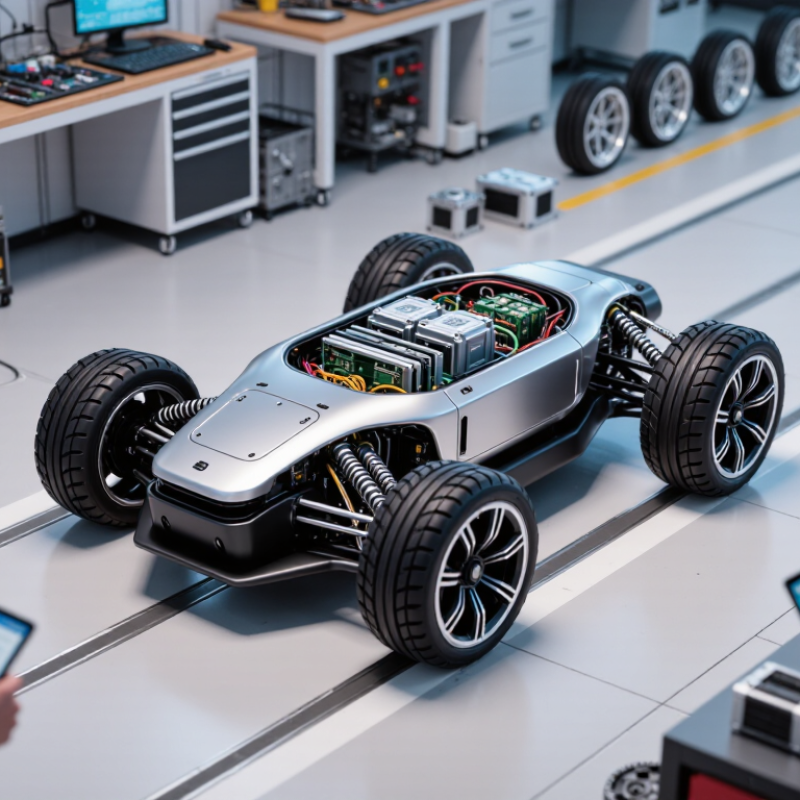
A faster robot begins with a measurable speed goal, not a higher motor setting. Define the task speed, payload, accuracy, cycle time, and maximum stopping distance. For example, a pick-and-place arm may target 0.8 meters per second while carrying two kilograms. That target should include acceleration and deceleration limits. Sharp movements can create vibration, dropped parts, and excessive mechanical stress.
Movement limits must reflect the real workspace. Mark safe joint angles, collision zones, tool clearance, and human access areas. ISO 10218 emphasizes risk assessment and protective measures for industrial robot applications. The International Federation of Robotics reported 541,302 industrial robots installed worldwide in 2023, with about 4.28 million operating globally. More robots mean more varied environments, not permission to remove safety margins.
A practical commissioning method is to begin at 50 percent speed. Increase it gradually while checking path accuracy, motor temperature, stopping distance, and payload stability. Watch the robot at every corner. A3 reported 31,159 robot orders in North America during 2023, showing continued adoption across demanding workplaces. Still, speed data alone can mislead. My early assumption was that shorter cycles always meant better performance. In practice, a slightly slower path may reduce retries and maintenance. Record each change, test under worst-case load, and revise limits when the workspace changes.
| Robot Application | Recommended Speed Goal | Typical Movement Limit | Acceleration Target | Turning or Stopping Constraint | Operating Surface | Key Speed-Planning Tip |
|---|---|---|---|---|---|---|
| Indoor delivery robot | 0.8–1.5 m/s | 1.5–2.0 m/s | 0.3–0.6 m/s² | Keep a stopping distance of at least 0.5–1.5 m, depending on load and sensor delay. | Level, smooth indoor floors | Set a lower speed near doors, intersections, people, and narrow corridors. |
| Warehouse mobile robot | 1.5–3.0 m/s | 3.0–4.0 m/s | 0.5–1.0 m/s² | Use wider turns and reduce speed while carrying unstable or tall loads. | Concrete or coated industrial flooring | Define separate speeds for empty travel, loaded travel, docking, and pedestrian zones. |
| Autonomous floor-cleaning robot | 0.4–1.0 m/s | 1.0–1.5 m/s | 0.2–0.4 m/s² | Allow extra distance for wet surfaces and cleaning-tool contact. | Tile, vinyl, sealed concrete, or polished floors | Prioritize consistent coverage and traction over maximum straight-line speed. |
| Outdoor inspection rover | 0.5–2.0 m/s | 2.0–3.0 m/s | 0.2–0.7 m/s² | Reduce speed on slopes, loose gravel, mud, and uneven ground. | Mixed outdoor terrain | Use terrain-based speed limits rather than one fixed maximum speed. |
| Agricultural field robot | 0.5–1.5 m/s | 1.5–2.5 m/s | 0.1–0.4 m/s² | Maintain stable wheel contact and avoid sharp turns that damage soil or crops. | Soil, grass, and planted rows | Match speed to tool performance, row spacing, soil traction, and crop sensitivity. |
| Collaborative arm on a workbench | 0.25–1.0 m/s tool speed | Lower near people and shared workspaces | 0.5–2.0 m/s² | Limit force, speed, and stopping distance according to the risk assessment. | Fixed industrial workstation | Use high speed only in verified free-space motion; slow down during handovers. |
| Small tracked exploration robot | 0.3–1.2 m/s | 1.5–2.0 m/s | 0.1–0.5 m/s² | Control skid turns carefully because turning can increase heat and energy use. | Rubble, ramps, soil, and rough terrain | Use torque and traction limits to prevent track slip and motor overheating. |
| Service or reception robot | 0.4–1.0 m/s | 1.0–1.5 m/s | 0.2–0.5 m/s² | Use gentle braking and a larger safety buffer around children and seated users. | Public indoor spaces | Optimize for predictable motion, low noise, and comfortable interaction. |
| Autonomous material tugger | 1.0–2.0 m/s | 2.0–3.0 m/s | 0.3–0.8 m/s² | Increase stopping distance when towing because the trailer adds momentum. | Industrial floors and marked routes | Calculate speed limits using total mass, trailer behavior, and route visibility. |
| Legged inspection robot | 0.3–1.5 m/s | 1.5–2.5 m/s | 0.1–0.5 m/s² | Reduce speed when footholds are uncertain or the body is carrying extra equipment. | Stairs, grating, concrete, and uneven terrain | Set limits for foot placement, body stability, battery temperature, and payload. |
Planning note: These are representative engineering ranges for early motion planning. Final speed limits should be validated through risk assessment, braking tests, payload tests, sensor-latency checks, surface testing, and applicable local safety requirements.
A lighter arm carries less inertia during acceleration, braking, and direction changes. Removing excess brackets, covers, and oversized fasteners may improve response. Lighter is not always better.
Measure payload, cycle time, motor temperature, vibration, and stopping distance. Use the same workpiece and route during every comparison. Guesswork creates weak conclusions.
Shorten moving links where practical. Use hollow beams after confirming their bending strength. Keep the center of gravity close to each joint. Balance moving assemblies carefully.
Route cables near the arm’s neutral axis, rather than outside the structure. Choose low-friction bearings with suitable preload. Check joint alignment and gear backlash before raising speed.
No. The result depends on link length, payload distribution, stiffness, and joint capacity. A thin plate beside a heavy joint may flex badly. The percentage is only a starting clue.
Create a restricted test zone and confirm protective stops. Keep people outside the robot’s motion envelope. Check mounting bolts, sensor response, torque limits, and stopping distance.
Change one parameter during each test. Increase speed in small steps, such as five percent. Repeat the full route with normal and worst-case payloads. Keep rollback settings ready.
High acceleration can create more vibration, overshoot, heat, and missed targets. Top speed may look acceptable while braking remains unstable. I have missed this in design reviews.
A slower cycle may reduce faults, vibration, and emergency stops. It can improve daily throughput when accuracy and reliability matter. Fast motion is not automatically productive.
How to make a robot move faster? Start by defining a clear speed target, operating environment, and safe movement limits. Faster motion is useful only when the robot can remain stable, accurate, and controllable. Reducing unnecessary weight, strengthening the frame, and improving the balance of the mechanical structure can help the robot accelerate more efficiently. Wheels, gears, motors, and power delivery should also be selected and adjusted to work together, avoiding energy loss and excessive strain.
Software is equally important. Control parameters should be tuned for smoother acceleration, quicker responses, and reliable stopping. Accurate sensors and efficient motion-planning methods can help the robot choose faster paths without sacrificing safety. Finally, test each improvement in a controlled area, measure speed, stability, power use, and stopping distance, then refine the design step by step. A careful combination of mechanical, electrical, and software improvements is the most reliable way to increase speed.
