Buddy robotics
Buddy robotics
Buddy robotics
The global educational robotics market has witnessed an unprecedented surge over the last decade. Block-based coding robots, which utilize visual programming languages like Scratch or Blockly, have become the cornerstone of modern K-12 education. This shift is driven by the realization that computational thinking is a "21st-century literacy." Across the United States, Europe, and Asia, governments are integrating robotics into standard curricula to prepare students for an increasingly automated workforce.
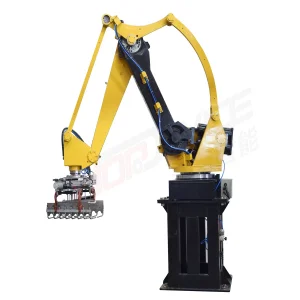
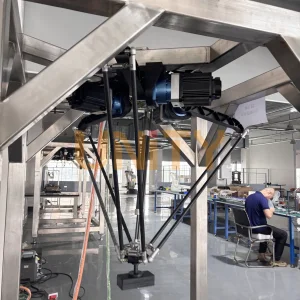
Industrially, block-based interfaces are no longer just for children. We are seeing a "low-code" revolution in industrial robotics, where intuitive drag-and-drop interfaces allow floor workers to program complex tasks without a PhD in computer science. This democratization of technology is bridging the gap between toy-like educational kits and high-end industrial automation systems.
Expected to reach a CAGR of 18% by 2030, fueled by the STEM education mandate globally.
Scratch 3.0 has become the universal standard for block-based logic, compatible with diverse hardware.
Educational kits now often feature ESP32 or Arduino controllers, making them "pro-sumer" grade.
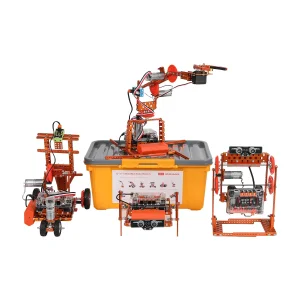
The industry is moving toward "Artificial Intelligence Integration." Today's block-based coding robots are no longer just about movement; they are about perception. Global procurement departments in educational institutions are now looking for kits that include camera modules for face recognition, voice interaction, and IoT (Internet of Things) capabilities. The demand has shifted from simple "move-and-turn" toys to sophisticated "sense-think-act" robotic systems.
Furthermore, there is a massive trend towards "Localized Cloud Learning." Schools require platforms that allow students to save their block-based projects in the cloud and share them with a global community. For procurement managers, the focus is on durability (metal over plastic), battery longevity, and cross-platform software compatibility (Chromebook, iPad, Windows).
As a leading Chinese factory in the heart of the global electronics supply chain, we offer advantages that domestic distributors simply cannot match:
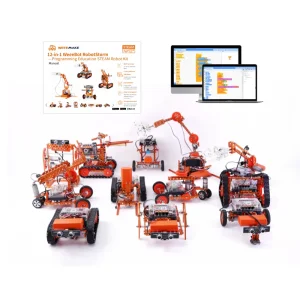
Our block-based coding robots are deployed across a variety of specialized environments:
1. The K-12 Smart Classroom: In high-income districts in the UAE and the US, our ESP32-based robots are used to teach Python through a block-to-code bridge, allowing students to see the transition from visual blocks to text-based logic in real-time.
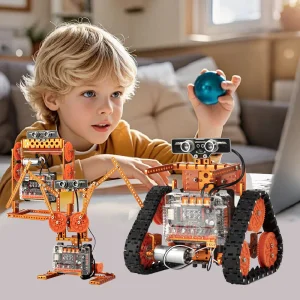
2. After-School Maker Hubs: In Europe’s growing "Maker Movement," our metal robot arms and tracked chassis are the preferred choice for competition-based learning, where durability is paramount.
3. Vocational Training Centers: In Southeast Asian markets like Vietnam and Thailand, our robots help bridge the labor gap by training technical school students on the fundamentals of PLC logic and industrial automation through simplified block-based interfaces.
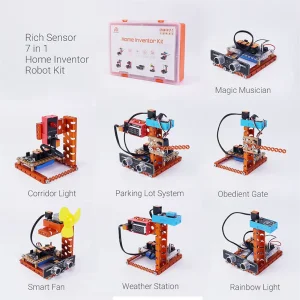
4. Home Inventor Kits: With the rise of remote learning, our 7-in-1 home kits provide a comprehensive curriculum that parents can facilitate without being experts in computer science.
childrenrobotics inspires young people to be science and technology leaders and innovators by engaging them in exciting mentor-based programs that build science, engineering, and technology skills.
We instill this value at every opportunity. We expect, require and reward on-field and off-field conduct that models the best values of professional respect and courtesy.
Our mission is to inspire, not to formally educate, but participation in one of our events involves the application of a remarkable range of creative and analytical skills.
Our programs are designed so that to succeed, teams must be able to cooperate with other teams as well as compete. This is an important real world skill.
Participating students fully reflect the diversity of contemporary society. Our program is volunteer led and volunteer delivered, ensuring wide accessibility.
To understand the dominance of block-based coding robots, one must look at the educational theories of Seymour Papert and Jean Piaget. "Constructionism" suggests that learners are most likely to develop new ideas when they are actively engaged in making some kind of artifact—be it a robot, a sandcastle, or a computer program. Block-based coding lowers the "floor" for entry, allowing a 7-year-old to control a sophisticated robot without getting frustrated by the syntax of semicolons and brackets.
However, as we move into 2024 and 2025, the "ceiling" of these products is rising. We are now integrating AI accelerators like the K210 or ESP32-S3 into our coding robots. This allows for block-based machine learning. Imagine a student dragging a block that says "If see Red Ball, then Grip." Behind that simple block is a complex neural network running on the robot. This is the future of the Top 10 China Best Block-Based Coding Robot Supplier industry—making high-level AI concepts accessible to elementary students.
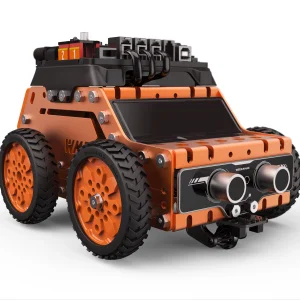
Our role as a supplier is to ensure that the hardware does not limit the software's imagination. By using anodized aluminum alloys, we ensure that the robot survives the physical "enthusiasm" of a classroom environment. By using standardized connectors (like PH2.0 or RJ25), we ensure that sensors are "plug-and-play," preventing the common frustration of broken jumper wires that can derail a 45-minute lesson plan.
Global logistics also play a key role. Our warehouse solutions provide drop-shipping for Amazon sellers and bulk sea-freight for government education ministries. We understand the regulatory landscapes, from the CPSIA in the US to the EN71 in Europe, ensuring that every piece of plastic and metal in our kits is safe for children. This comprehensive approach is why we are consistently ranked among the top suppliers for STEM robotics globally.